
Providing employee uniforms that fit well and offer all-day comfort is a key challenge for procurement and human resources departments. Using the correct how to choose employee uniform sizes method helps prevent incorrect ordering and reduces the need for alterations. As a custom uniform manufacturer, we understand that every employee’s body shape varies significantly.
This article compiles best practices and systematic size data collection steps so your organization can prepare for measuring and production smoothly, meeting the practical needs of everyone in the company.
The Importance of Collecting Body Measurements Before Custom Tailoring
Guessing sizes from standard ready-to-wear apparel often leads to uniforms that are too tight or too loose. Workwear requires freedom of movement for actions such as walking, sitting, standing, and lifting. Establishing standard S, M, L sizing charts or taking actual chest, waist, and hip measurements for each employee allows the factory to tailor garments closest to their actual body shape.
Additionally, scheduling measurement sessions clearly, such as measuring while employees wear normal clothing, ensures appropriate ease allowances. Generally, custom polo shirts or dress shirts include an ease allowance of about two to four inches to ensure comfortable wear and good breathability.
Steps for Measuring and Creating Corporate Sizing Charts
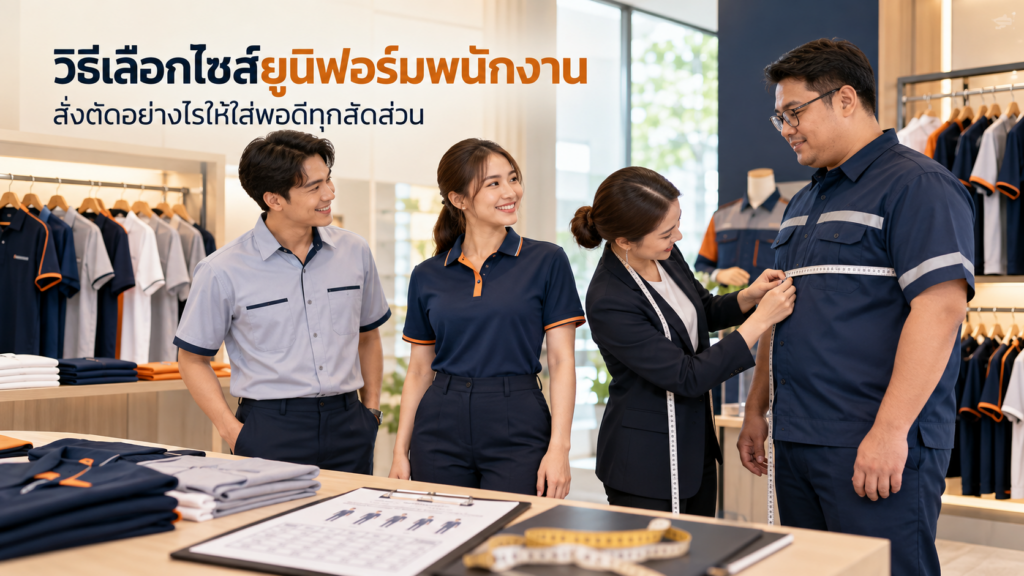
To make data collection efficient, HR should prepare by appointing responsible personnel for taking measurements and using standardized measuring equipment. Key steps include measuring the chest at the widest point, the waist around the navel, and the hips for trousers or skirts.
We recommend creating a size record form for each employee organized by department, including ID numbers to prevent errors when sending data to the production factory. Furthermore, a size buffer for new hires should be planned in advance based on the annual employee turnover rate to ensure cost-effectiveness for bulk production runs.
Managing Special Sizes and Unique Body Shapes
Large organizations often have employees with special body shapes, such as being very tall or exceeding standard sizing chart criteria. Forcing these employees to wear the closest standard size reduces work efficiency due to discomfort.
Procurement teams should discuss special sizing policies with the manufacturing factory in advance, which usually involve a slight additional cost due to separate pattern adjustments. Preparing for special sizes from the start ensures that all employees in the organization receive a uniform they can wear with confidence.
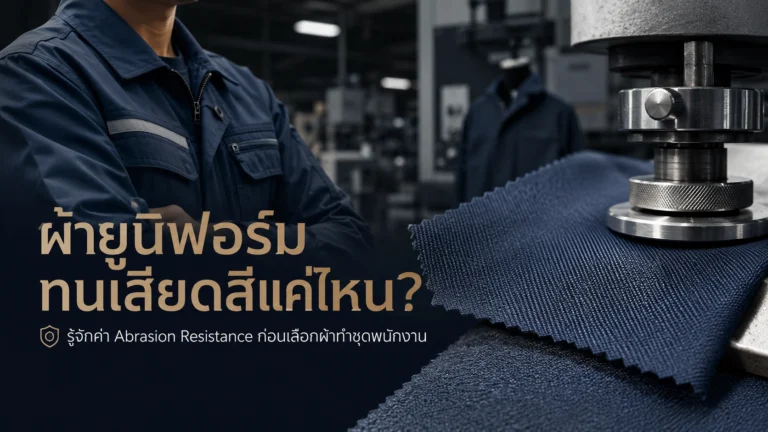
Another precaution is that different fabric types have varying stretch and shrinkage rates, such as 100% cotton potentially shrinking after the first wash, or high-stability polyester. The manufacturing factory must factor in fabric properties alongside size allowances so that the finished garments still fit perfectly after washing.
Common Sizing Mistakes and How to Prevent Them
The most frequent issue in custom uniform ordering is relying solely on weight and height criteria without taking actual body measurements. Individuals with the same weight can have completely different body structures and frames, such as broader shoulders or a protruding belly. Relying only on weight often results in tight chests or buttons that cannot be fastened.
This problem can be prevented by having employees try on actual sample sizes provided by the factory before mass production begins. This method allows each individual to immediately know their correct size and effectively reduces the error rate in bulk custom orders.
Conclusion: Best Practices for Cost-Effective Employee Uniform Sizing
Choosing employee uniform sizes for a proper and comfortable fit requires close collaboration between the organization and the manufacturing factory, covering actual body measurements, appropriate ease allowances, and fabric property considerations. Careful planning ensures attractive, durable uniforms that maximize your organizational investment budget.