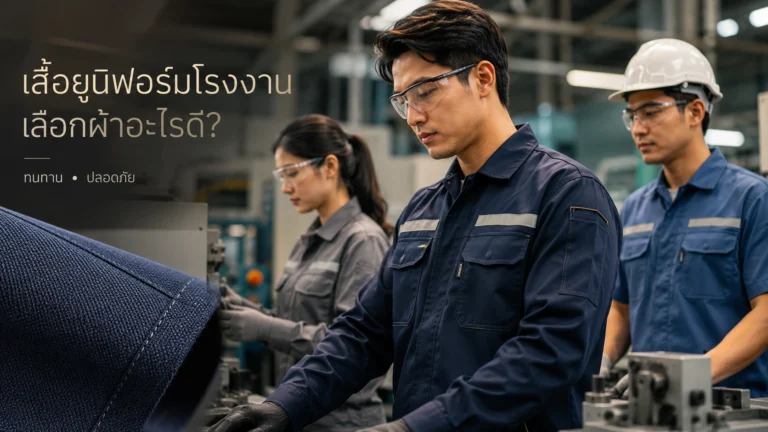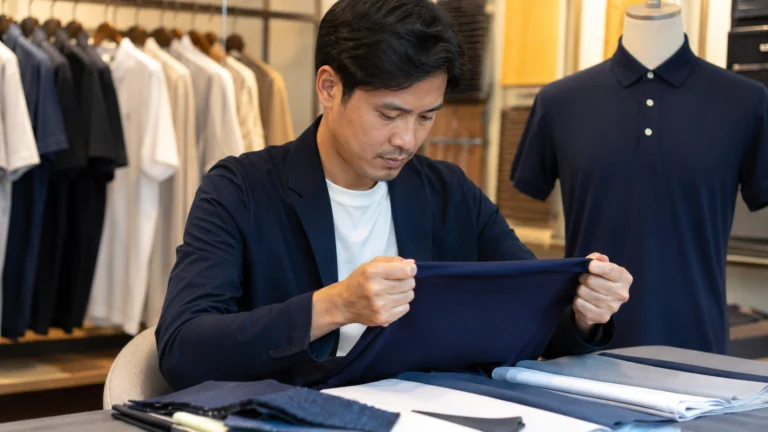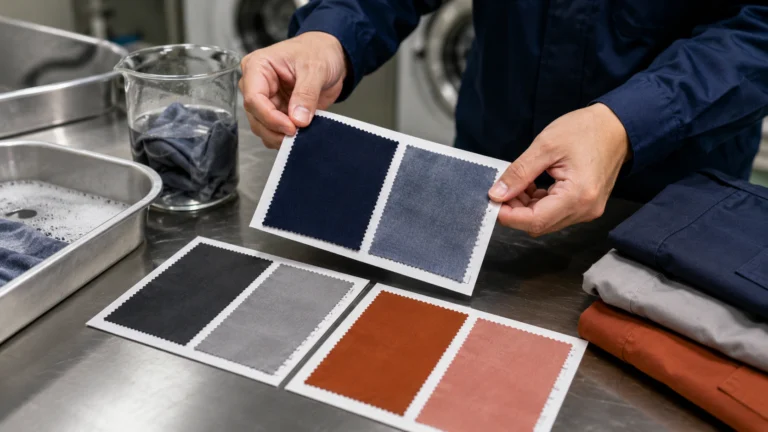

When purchasing employee uniforms for an organization, a common issue is premature tearing or wear and tear at high-friction points. As Mixprint Co., Ltd., the manufacturer behind ชุดพนักงาน.com, we would like to share our expertise on abrasion-resistant fabrics and durability criteria to help you accurately select durable uniform materials that meet your actual operational needs.
Understanding Abrasion Resistance and Fabric Durability Standards
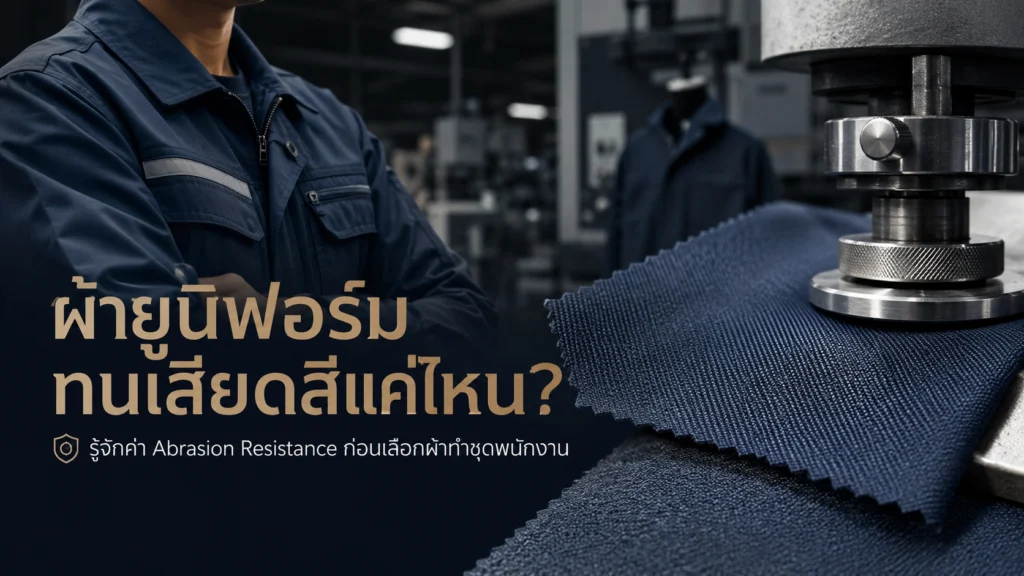
In industrial garment manufacturing, abrasion resistance is measured in rub cycles, commonly known as the Martindale test. This testing equipment rubs the fabric sample against a standard material until the fibers begin to break or damage. A higher number of cycles indicates greater fabric durability, making it ideal for active work environments.
Criteria for Choosing Fabric Weight and Cycle Counts to Suit Job Roles
When selecting fabrics, fabric weight in grams per square meter (gsm) should be considered alongside abrasion ratings. For general office staff, a fabric weight of approximately 150 to 200 gsm is sufficient. However, for field personnel or technicians, you should choose fabrics with a weight of 250 gsm or higher that meet industrial standard abrasion thresholds to prevent tearing during work duties.
Fiber Types and Their Impact on Wear Resistance
Fiber blends have a direct impact on product lifespan. 100% cotton offers softness and comfort but wears out faster than polyester blends. Therefore, we recommend using a balanced blend of cotton and polyester, which helps the fabric maintain its shape, offers better abrasion resistance, and is easier to maintain than before.
Precautions When Ordering Corporate Uniforms to Prevent Premature Fabric Degradation
Beyond reviewing fabric specifications, tailoring and seam construction are equally important. High-friction areas, such as underarms and trouser crotches, should feature double-stitching or reinforced bar-tacks for added durability. Minimum order quantities (MOQ) and delivery lead times depend on your specific designs and quantities required for each batch.
Summary of Decision-Making Criteria for Corporate Uniform Fabrics
To maximize your organizational budget when selecting uniforms, procurement and HR departments should verify fabric specifications, abrasion resistance ratings, and fabric weights to align with employees’ actual job functions, ensuring long-lasting and professional-looking uniforms.