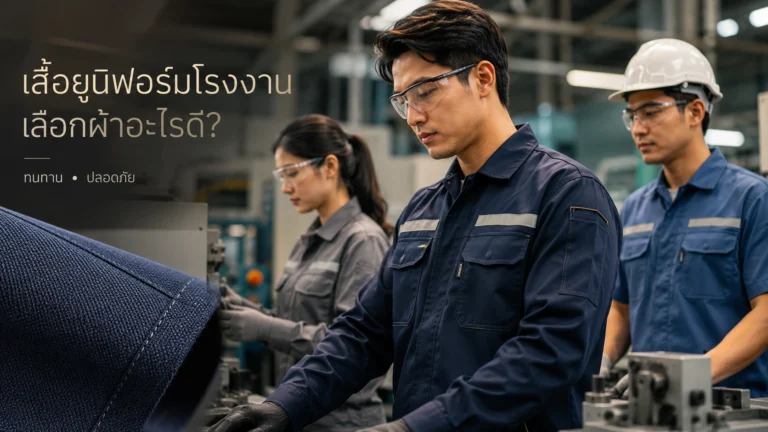


For corporate procurement and HR teams, selecting fabric for custom employee uniforms often starts with checking thickness and color. However, another technical property is frequently overlooked yet vital for brand image: the stretch and recovery capability of the fabric. Drawing from our actual manufacturing experience, we have compiled case studies to help explain why stretch-recovery properties are the core of modern corporate uniforms.
Lessons from Case Studies on Sagging and Deformed Uniforms
From a case study of a company that ordered custom uniforms for operational and warehouse staff who must move constantly throughout the day, the procurement team initially chose a fabric blended with spandex fibers for comfort and flexibility. However, after only three months of industrial laundering and actual use, the shirts began to lose their shape. The elbow and knee areas became baggy and stretched out without returning to their original form, making the employees look unprofessional and forcing the organization to replace the uniforms ahead of schedule. The main cause was the fabric’s lack of proper recovery properties after stretching.
In-Depth Look at Stretch-Recovery Mechanics in Practical Application
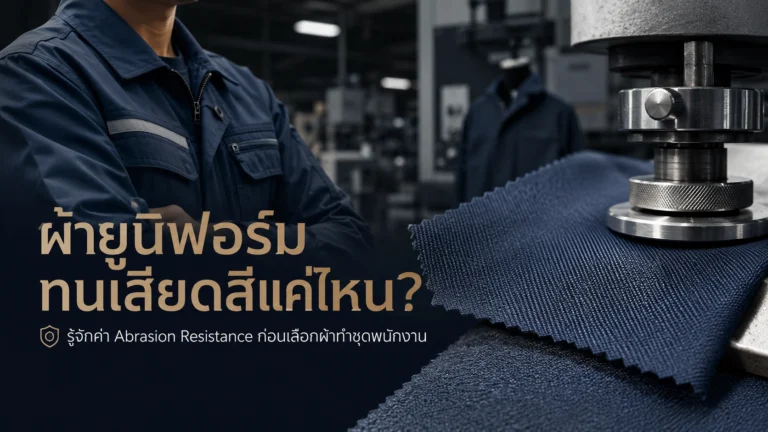
The stretch-recovery property, technically known as stretch and recovery, results from the seamless integration of main fibers such as cotton or polyester with high-quality elastomeric fibers. In our uniform manufacturing process, we prioritize fabric weight—commonly ranging from yD0 to yD0 grams per square meter (gsm) depending on the uniform design—alongside tensile strength and recovery testing based on industrial standards. If a fabric has good stretch but lacks adequate recovery force, it will permanently sag when employees wear and repeatedly flex throughout an eight-hour workday.
Criteria for Choosing Uniform Fabrics to Prevent Sagging Issues
Summary of Stretch Fabric Selection for Uniforms
Prioritizing stretch-recovery properties before ordering employee uniforms is a worthwhile investment that reduces the hassle of frequent replacements and maintains a professional appearance for your staff, effectively reflecting your organization’s standards.