
Delays in delivery from uniform manufacturers often cause major headaches for procurement and human resources departments. Choosing a uniform manufacturing factory with insufficient capacity can negatively impact project plans and corporate image. Understanding selection criteria is essential to ensure that your products are delivered on schedule as required.
Evaluate Production Capacity and Factory Machinery
The first step in considering a uniform manufacturing factory is to inspect its actual production capacity. A standard-compliant factory should have fully integrated machinery ranging from cutting, sewing, embroidery, and logo screen printing under one roof. This minimizes the risk of outsourcing to subcontractors, which is often a primary cause of delays. Procurement teams should inquire about the number of machines and regular sewing technicians to ensure that we can accommodate your organization’s large-scale orders within your set timeframe.
Inspect Production Cycles and Delivery Schedules
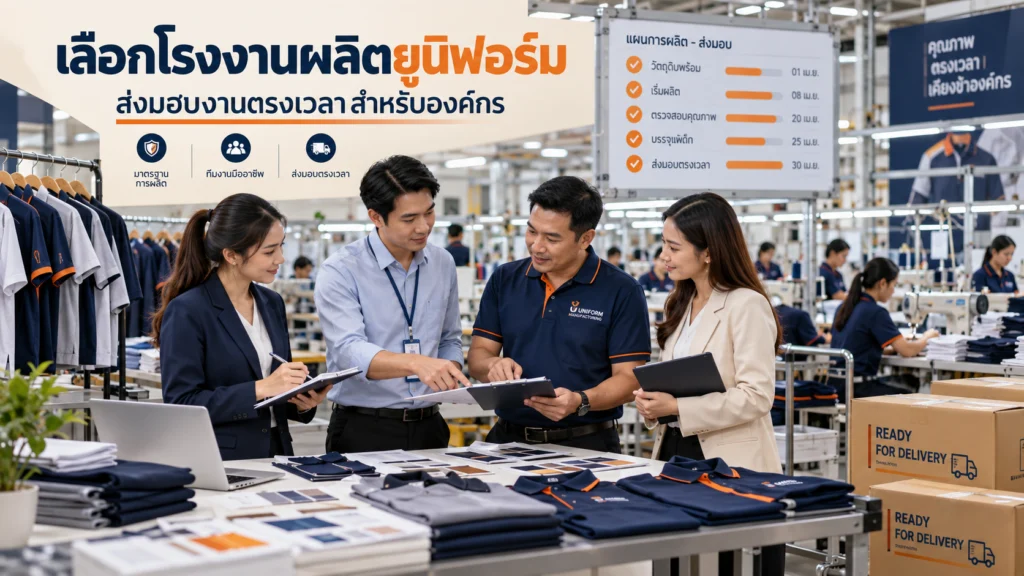
The production lead time for employee uniforms typically depends on the style, quantity, and design complexity. Generally, a factory with sound management systems will issue a clear production timeline confirmation sheet, starting from design finalization and sampling down to the actual delivery date. Choosing a manufacturer with systematic schedule planning helps you transparently track progress at every stage and prevents potential delivery default issues.
Consider Past Experience and Track Record
Experience in producing uniforms for large organizations testifies to reliability and delivery discipline. A professional factory will have verifiable reference portfolios and a solid understanding of corporate business workflows. Having a dedicated sales and coordination team to regularly update work statuses is a key highlight that ensures smooth and punctual communication between your organization and the factory.
Material Readiness and Supplier Network
Out-of-stock fabric issues or waiting for imported raw materials are another factor causing production disruptions. A good uniform manufacturing factory should maintain sufficient backup basic fabrics in stock or possess a stable network of fabric suppliers capable of promptly sourcing fabrics matching your organization’s required GSM weight and shade. Having materials readily prepared allows the factory to shorten the lead time for starting the sewing process and ensures that work is completed by the definite delivery deadline.
Summary of Guidelines for Choosing a Uniform Manufacturer for Timely Delivery
Selecting a uniform manufacturing factory capable of on-time delivery requires comprehensive evaluation covering production capacity, schedule management systems, operational experience, and material readiness. Choosing a professional partner with a verifiable operational system helps mitigate risks and enables procurement teams to manage staff uniform production projects smoothly and worry-free.